

Finding Profits in a Challenging Market: David Hopkins on Cost Control, Menu Strategy, and Navi
Rising food costs, labour pressures, and shrinking margins continue to challenge foodservice operators across Canada. While growing sales remains important, profitability often comes down to something less visible: controlling costs. From inventory counts and supplier purchases to recipe costing and menu pricing, even small inefficiencies can have a significant impact on the bottom line.
 Over the years, Hopkins and his team have worked with hundreds of restaurants, golf courses, hotels, clubs, and other foodservice operators, helping businesses identify hidden profit opportunities and improve financial performance. A key focus area for The Fifteen Group is helping operators better understand the connection between menu pricing, recipe costing, purchasing, and profitability. Through consulting engagements and workshops, Hopkins regularly encounters operators who have either never fully costed their menus or are using pricing strategies that leave profit on the table.
Through that work, he noticed a recurring challenge: many operators lacked visibility into the true costs behind their menus, inventory, and purchasing decisions. That insight ultimately led to the creation of Navi, a cloud-based inventory and cost-control platform launched in 2022.
The Cost Control Challenge Facing Foodservice
 According to Hopkins, while today’s operators are facing unprecedented pressure from inflation, labour shortages, and rising food costs, the underlying challenge has remained remarkably consistent throughout his career.
“The challenges operators face today are the same ones we’ve been facing for 30 years,” he explains. “Input costs continue to rise, whether that’s product costs or labour costs.”
What has changed is the amount of room operators have for error. With margins already under pressure, inaccuracies in purchasing, menu pricing, and inventory management can quickly erode profitability.
One of the biggest issues Hopkins sees is surprisingly simple: restaurants that don’t fully understand the cost of the products they’re selling.
After conducting hundreds of foodservice workshops and consultations, he estimates that about 80% of independent operators have never properly costed their menus. Even among those who have completed menu costing exercises, many are using pricing strategies that don’t accurately reflect profitability.
The financial impact can be substantial. Hopkins estimates that properly costing and pricing a menu can add three to four percentage points back to a restaurant’s profit margin. For a business generating $2 million in annual sales, Hopkins says that can represent up to $80,000 in additional profit.
The challenge extends beyond menu pricing. Purchasing decisions, inventory management, recipes, and menu engineering are all interconnected. When operators don’t have reliable visibility into those areas, it becomes difficult to understand their true costs and identify opportunities for improvement.
“Trying to cost a menu in a spreadsheet can be a complete nightmare,” says Hopkins. “It takes hours upon hours of work, and keeping everything updated becomes difficult very quickly.”
Turning Data into Action
 For operators looking to improve profitability, Hopkins believes it starts with establishing stronger cost-control fundamentals.
Regular and accurate inventory counts help operators understand exactly what they’re purchasing, what they’re consuming, and where they may be losing money through waste, over-portioning, or shrinkage. Recipe costing provides visibility into the actual cost of the menu item, while menu optimization helps operators evaluate products based on both profitability and popularity. The goal is not simply to lower food costs, but to maximize contribution margins while maintaining guest value through pricing, promotion and product mix.
For multi-unit operators, standardized recipes, purchasing procedures, and inventory controls also create consistency, make it easier to compare performance across locations, and identify opportunities for improvement.
Ultimately, the most successful operators are the ones who regularly review their numbers and use data to guide decisions rather than relying on assumptions.
How Navi Helps Operators Gain Control
The idea behind Navi came directly from challenges Hopkins and his team repeatedly encountered while working with operators.

For years, businesses were forced to choose between spreadsheets and highly complex enterprise inventory systems. Spreadsheets were affordable but time-consuming, while many sophisticated platforms required extensive setup, ongoing maintenance, and dedicated resources to manage.
“There was nothing in the middle,” says Hopkins. “We saw a need for something better than a spreadsheet, but not as complicated as the enterprise solutions available on the market.”
Navi was designed to fill that gap.
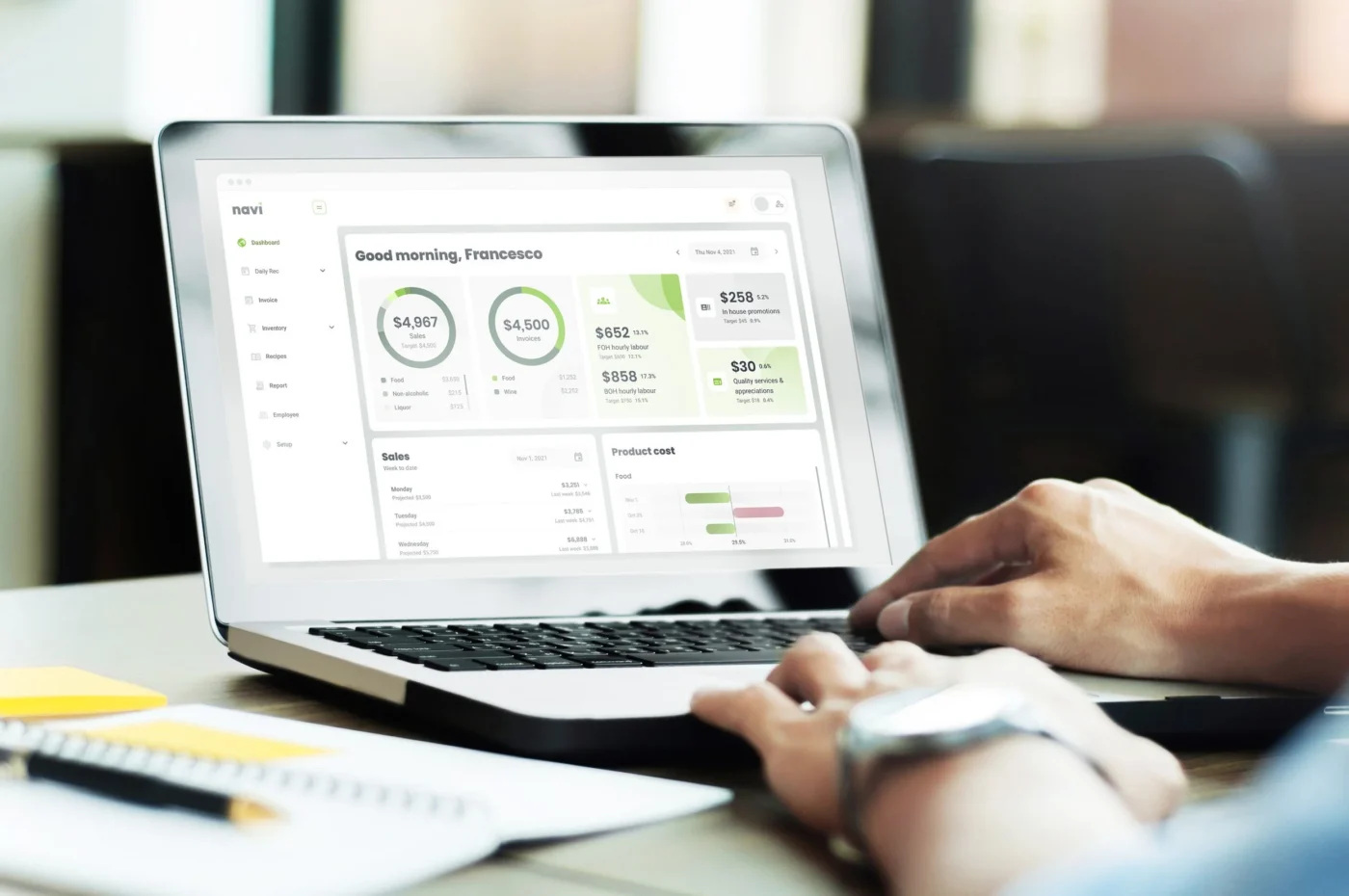
The platform provides operators with tools for inventory management, recipe costing, menu analysis, food and beverage cost tracking, and reporting. Unlike some systems that require operators to recipe every menu item and integrate every point-of-sale transaction, Navi focuses on practical adoption and ease of use.
Operators can begin using the platform immediately for inventory management and cost tracking, then gradually build recipes and costing information over time. Rather than requiring 100 percent menu integration on day one, the platform encourages operators to focus on the menu items that drive most of their revenue.
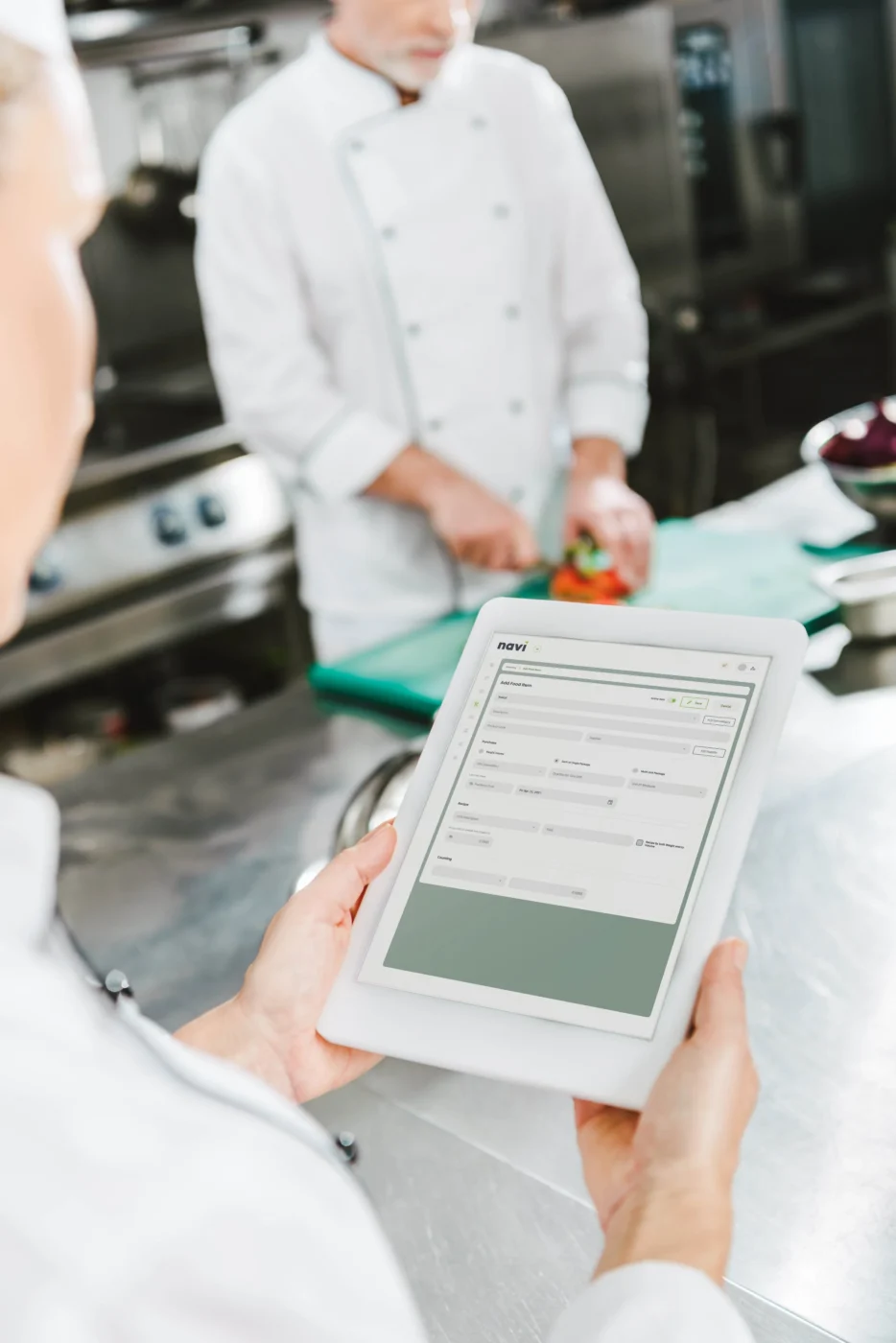
The platform also significantly simplifies the inventory-counting process. Using Navi’s mobile app, multiple team members can complete inventory counts simultaneously, with information automatically feeding back into the system. What once took six to eight hours using manual counting sheets and spreadsheets can often be reduced to less than an hour.
Today, Navi is used by a wide variety of foodservice operators, including independent restaurants, golf courses, private clubs, hotel food and beverage operations, catering companies, and small multi-unit restaurant groups. The platform is particularly valuable for businesses that need better cost visibility but don’t have the resources to manage more complicated enterprise systems.
Final Advice for Operators
For Hopkins, the path to stronger profitability doesn’t start with cutting costs. It starts with understanding them.
Whether operators use spreadsheets, dedicated software, or a combination of tools, the most important step is gaining visibility into inventory, pricing, and menu performance. With accurate data and consistent processes, operators can make smarter decisions, respond more effectively to changing market conditions, and build healthier, more profitable businesses.
“Knowing your numbers is still one of the most powerful things you can do,” says Hopkins. “When you understand your costs, you can make better decisions and put yourself in a position to succeed.”
Interested in learning more? Foodbuy members receive exclusive pricing benefits through the Foodbuy-Navi partnership. Contact your Foodbuy representative for additional information and to explore whether Navi is the right fit for your operation.